

Our lives have suddenly changed due to the emergence of COVID-19. The situation we are going through is unprecedented and, therefore, none of us has any prior learning or experience on how to face it. We also don't know when or how it will end, and that can make us feel very uncertain and uncomfortable.
We remain in lockdown and as the days go by, not all of us respond in the same way to this extraordinary and unforeseen situation we have had to live through.
In this post I will explain how different emotions arise during this period in which the SARS-CoV-2 virus and the COVID-19 disease unfortunately continue to be the main topic of interest.
In general, an outbreak of an infectious disease such as COVID-19 can cause emotional distress and anxiety. It is common to feel anxious, confused, overwhelmed or helpless, especially in the face of the uncertainty generated by an event with which we are not familiar.
It is worth noting that these emotions can arise even if we are not at high risk of being infected.
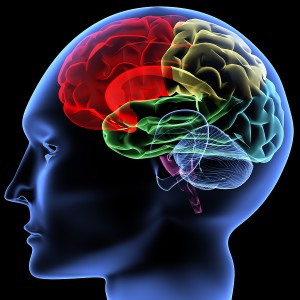
Our brain has an alarm system that warns us when we feel vulnerable, when we are in danger, when we are faced with a situation we cannot control, or when we feel uncertainty.
When this alarm is activated, we may begin to notice some symptoms, such as insomnia, anxiety, negative thoughts, chest tightness, claustrophobia, sadness, restlessness or fear.
It is normal to feel this way, as it is a state of general alert, in which we are constantly bombarded with negative information that conveys the message that we are in danger. We should not feel bad about ourselves or our loved ones for feeling these emotions.
Let's review which ones are most common:
Anxiety
Anxiety arises in situations that present us with a threat or danger. It is similar to fear, with the difference that anxiety is generated before this threat becomes real. Simply by thinking that the possibility exists, we feel anxious.
This is one of the emotions that occurs most frequently with COVID-19.

Fear
Fear is the feeling of distress generated in the face of uncertainty, such as a threat or danger.
An example to differentiate fear from anxiety would be the following: I feel anxious because the virus exists, even though I am at home. Also, today I am afraid because I have to go out to buy groceries.

Sadness
Sadness can arise for different reasons. When we feel left aside, when we are unable to express our feelings, or when we feel forgotten. We can also feel sad due to disappointments, when we lose hope, when we fail, when our self-esteem is low, or when we lose a loved one.
When this emotion exceeds certain limits, care must be taken with depression.

Boredom
Boredom is an emotional state experienced when we have nothing in particular to do, or when we are not interested in everything we can do. It is one of the most modern emotions, and is an unpleasant mental state that can become dangerous and harmful to health.
However, we can take advantage of moments of boredom to develop our creativity.

Confusion
We feel confused when we receive information that we don't know whether it is true or not.
Information reaches us in a constant flow. Any new information we receive we compare with what we already know. When this information contradicts or does not fit with previous information, or with our experience, we feel confused. The confusion will persist until we find a solution to this mismatch.

Useful tips for combating these emotions
During the SARS-CoV-2 lockdown, we can take some steps that can help us combat the above emotions.
- It is important to set ourselves a limit when using media, such as social networks, radio or television. Too much time can have a negative impact on our mental state.
- Let's try to stick to information from official sources and research carried out by experts. We all know that social networks contain a lot of information that is not true regarding everything surrounding COVID-19.
- Let's stay in touch with our loved ones. Connecting with family and friends can do us a lot of good because we will share our feelings with others, and this will often help us to combat them. If we also talk about topics other than COVID-19, it will help us all relax and enjoy the conversation more.
- Let's stay active. We should try to exercise, stay well hydrated and eat healthy foods. It is important to avoid snacking at all hours, as well as getting enough sleep.
- Let's try to avoid negative internal dialogue, with thoughts like "we can't go out", "this is going on for too long", "what if something happens to my family?", "what will happen if I get infected?", "what will happen to my job?".
It is not easy to avoid, but we have to think that most of the time, negative anticipations never end up occurring. Let's replace these thoughts with more reassuring ones such as "all of this is temporary", "for now we are fine", "I am safe at home".
This lockdown can serve to teach us to sort out our priorities and values.
Hopefully this isolation will bring about new values and reaffirm the importance of community, coexistence and intimacy.
What is undeniable is that it is a time for reflection, in which there is less noise and therefore the possibility of greater clarity.
We are swimming between fear and helplessness, between anger and sadness. Despite the lockdown, spring is already here — a sign of hope.
I hope this post has been useful to you and if you have any questions I will be happy to read your comments.